

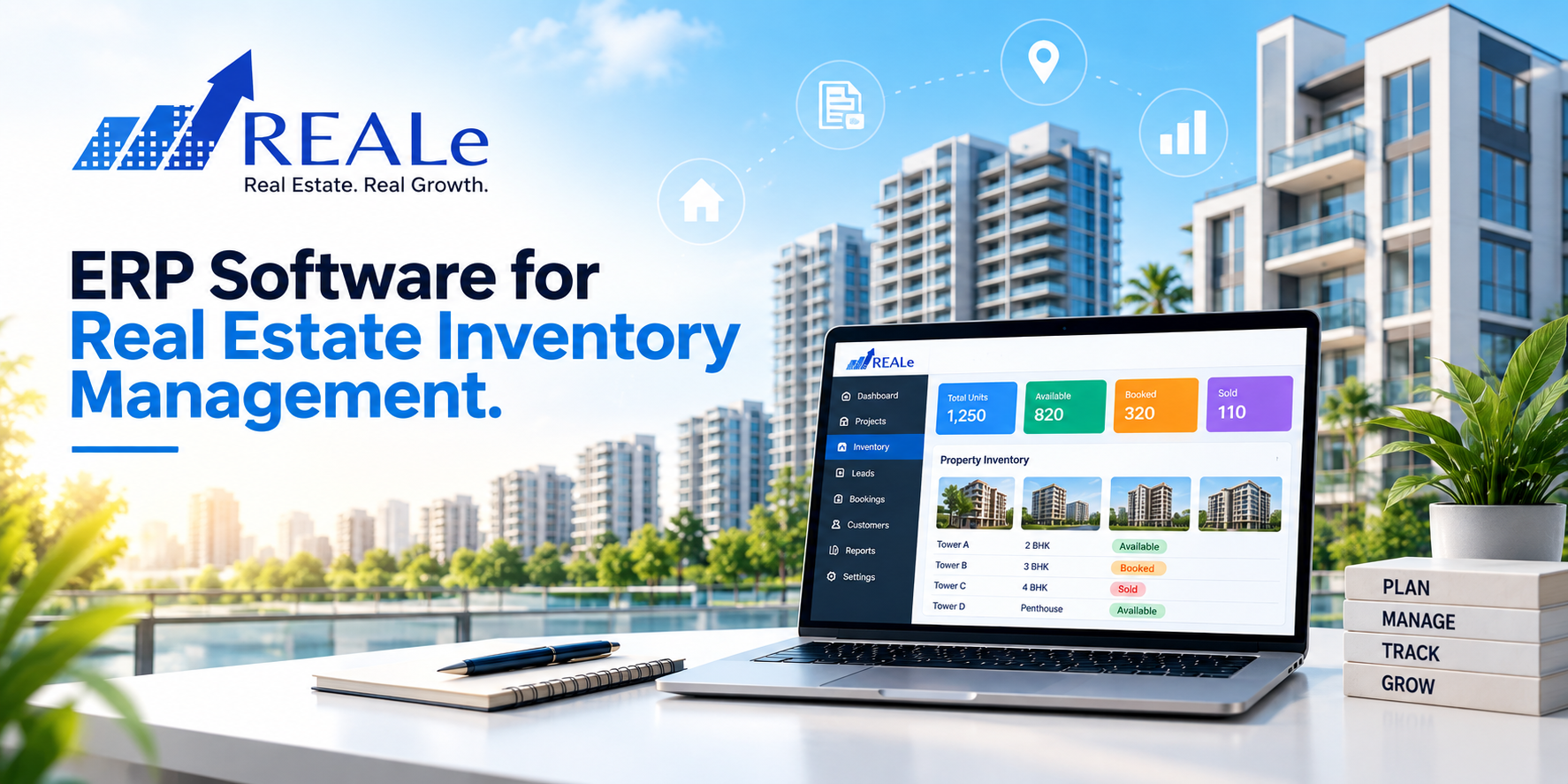
Real estate inventory can become difficult to manage when projects, unit types, bookings, pricing and sales data are spread across spreadsheets and disconnected systems. Modern ERP software for real estate brings this information together, giving builders and developers better visibility, faster decision-making and stronger control over inventory.
From tracking available units to forecasting demand, an integrated ERP can turn inventory management into a more accurate and efficient business process. Here are five practical ways ERP software can transform real estate inventory management.
1. Centralized Inventory Management
An ERP system creates a single source of truth for inventory across projects, locations, phases, towers, floors and unit types. Instead of depending on multiple spreadsheets or manual updates, teams can access current inventory information from one platform.
- Track residential, commercial and plotted inventory in one place
- View unit status such as available, booked, sold, blocked or under processing
- Reduce duplicate entries and manual data errors
- Access project-wise and phase-wise inventory quickly
2. Real-Time Inventory Updates and Transparency
Real estate inventory changes constantly because of bookings, cancellations, resales, transfers and new launches. ERP for builders and developers helps sales, finance, management and other departments work with the latest information, reducing communication gaps and the risk of offering an unavailable unit.
- Update bookings, cancellations and resales in real time
- Improve coordination between sales, finance and construction teams
- Give customers more accurate information about availability and pricing
- Create greater transparency for internal teams and stakeholders
3. Better Planning and Forecasting
With centralized inventory data and analytics, developers can identify demand patterns and make more informed decisions. An ERP can help management understand which unit types are moving quickly, which are slow-moving and where inventory may need a different sales strategy.
- Identify fast-selling and slow-moving units
- Plan future project phases based on demand
- Support pricing and promotional decisions with data
- Reduce holding costs and improve cash-flow planning
4. Improved Customer Experience
Accurate inventory information helps sales teams respond to buyers with confidence. When availability, pricing, unit details and project information are accessible from a connected system, customers can receive faster answers and experience a smoother buying journey.
- Quickly show available units and current pricing
- Share up-to-date project and unit information
- Reduce delays in communication and follow-up
- Build trust through accurate and consistent information
5. Integration with Other Business Functions
Inventory management works best when it is connected with the rest of the real estate business. ERP software for real estate can integrate inventory with CRM, finance, construction, procurement, reporting and other workflows, helping teams operate from connected data instead of isolated systems.
- Connect inventory with sales, CRM, finance and accounts
- Track construction progress alongside project inventory
- Manage procurement and project-related data more efficiently
- Get a 360-degree view of projects and business performance
For modern real estate businesses, effective inventory management is more than knowing which units are available. It requires accurate data, real-time visibility, forecasting, collaboration and integration across departments. The right ERP for developers can bring these capabilities together, helping organizations reduce errors, improve customer service, optimize inventory and make faster business decisions.
If you are looking to streamline inventory across multiple real estate projects, ERP software can provide the centralized control and visibility needed for smarter growth.