

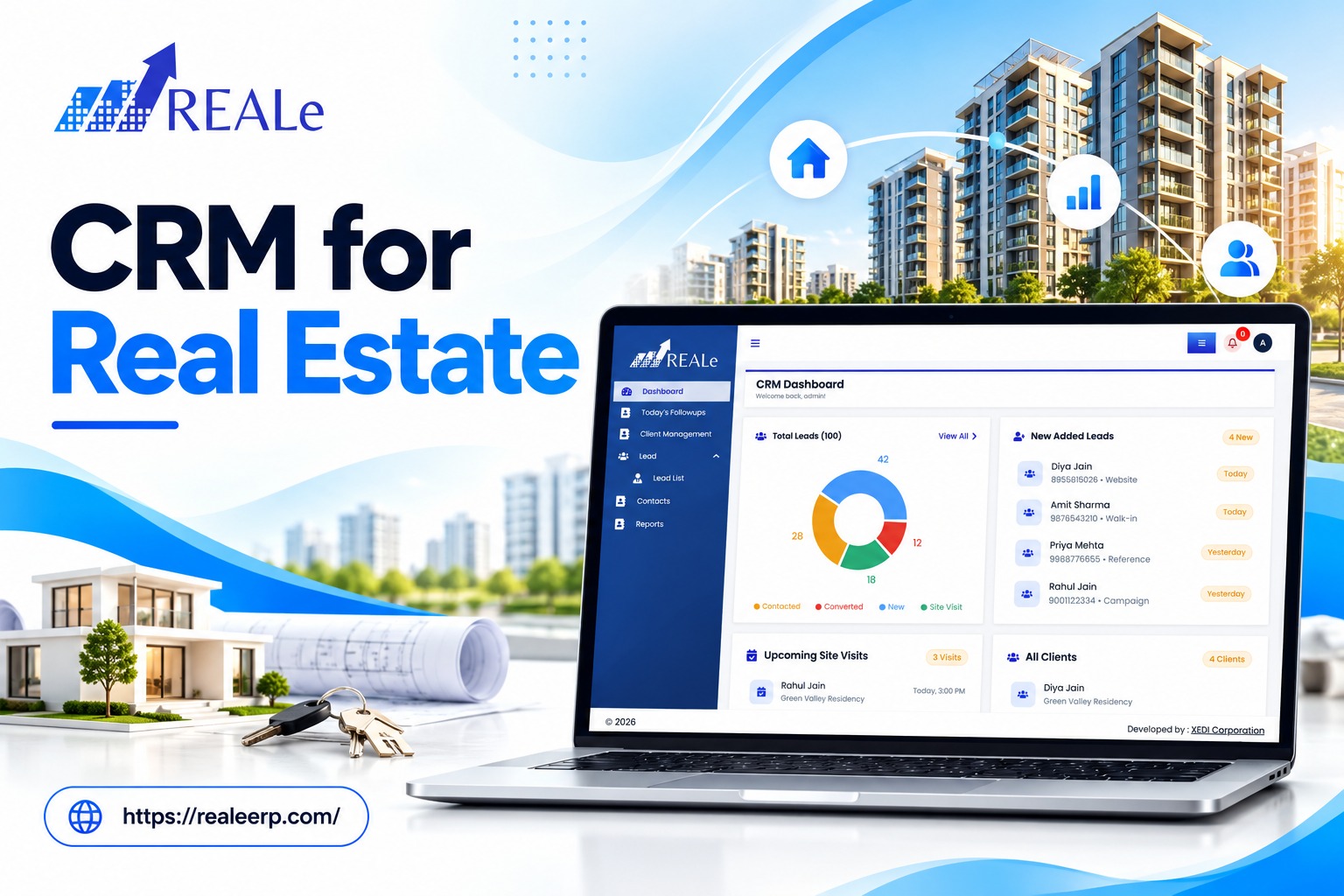
Real estate sales involve multiple leads, enquiries, site visits, follow-ups, brokers, customers, bookings and sales activities. Managing this information through spreadsheets, phone calls and disconnected tools can make it difficult for builders and developers to maintain visibility over their sales pipeline.
This is where real estate CRM software can make a significant difference. A specialized CRM helps real estate companies organize customer information, track leads, schedule follow-ups, manage site visits and monitor sales performance from a centralized platform.
In 2026, REALe provides a CRM solution specifically designed for real estate builders and developers, helping sales and marketing teams manage the complete customer journey from lead generation to conversion.
What Is Real Estate CRM Software?
Real estate CRM software is a customer relationship management system designed to help builders, developers, brokers and real estate sales teams manage leads, prospects and customers.
Unlike a basic contact-management system, dedicated CRM software for real estate can support activities such as:
- Lead capture and qualification
- Enquiry management
- Lead assignment and tracking
- Site visit scheduling
- Customer follow-ups
- Call and meeting tracking
- Sales pipeline management
- Task and reminder management
- Customer communication
- Sales reports and analytics
For real estate businesses handling multiple projects and large numbers of prospects, having these activities in one centralized system can make sales operations more organized.
Why Builders and Developers Need CRM Software in 2026
Real estate customers often interact with a company several times before making a purchase decision. A prospect may submit an enquiry, speak with a sales executive, visit a project site and require multiple follow-ups before booking a property.
Without a structured system, important customer information and follow-up activities can become difficult to track. A dedicated CRM can help builders and developers in the following ways.
1. Centralize Leads
Leads can come from websites, social media, property portals, advertisements and referrals. REALe CRM supports lead capture from multiple sources and provides tools for lead assignment, qualification, categorization and tracking. This gives sales teams a centralized place to manage prospects instead of maintaining separate lists.
2. Manage Customer Enquiries
Every enquiry represents a potential sales opportunity. CRM software can help sales teams record enquiry details, track the source, assign priorities and monitor enquiry status. REALe includes enquiry registration, source tracking, priority management, status tracking and enquiry reports.
3. Track Site Visits
Site visits are an important part of the real estate sales process. Sales teams need to know which prospects have scheduled visits, whether they attended and what happened after the visit. REALe CRM provides site visit scheduling, confirmation, feedback, tracking and reporting capabilities.
4. Never Miss Important Follow-Ups
One missed follow-up can mean a lost sales opportunity. A CRM helps sales executives schedule follow-ups and reminders while maintaining a record of customer interactions. REALe provides follow-up scheduling, reminder notifications, call tracking, meeting tracking and follow-up reports.
5. Maintain Complete Customer Information
Real estate sales teams frequently communicate with customers through calls, emails, messages and meetings. Keeping these interactions organized helps sales executives understand the history of each prospect. REALe CRM provides call logs, email tracking, SMS records, meeting notes and a communication timeline.
Key Features to Look for in the Best CRM Software for Real Estate
When evaluating the best CRM software for real estate, builders and developers should consider features that directly support their sales workflow.
Lead Management
The CRM should allow businesses to capture, assign, qualify, categorize and track leads throughout the sales pipeline.
Enquiry Management
A good system should make it easy to register enquiries, identify their sources, set priorities and monitor their status.
Site Visit Management
The ability to schedule and track site visits helps sales teams maintain visibility over one of the most important stages of the property sales journey.
Follow-Up Management
Follow-up scheduling, reminders, call tracking and meeting records can help sales executives maintain consistent communication with prospects.
Task and Reminder Management
Sales teams manage many activities every day. Task assignments, activity calendars, meeting reminders and notification alerts can help teams stay organized.
Reports and Analytics
Management needs more than individual lead records. It also needs visibility into lead conversion, sales performance, follow-up activity and site visits. REALe provides CRM dashboards and reports covering lead conversion, sales performance, follow-up analysis and site visits.
REALe CRM Software for Real Estate Builders and Developers
REALe CRM is part of the REALe ERP platform and is designed specifically for the real estate industry. The platform brings together lead management, customer engagement and sales activities in a centralized environment.
According to REALe, its CRM module supports the process from lead generation and enquiry tracking through site visits, follow-ups and sales conversion. Key capabilities include:
- Lead and prospect management
- Contact and customer database
- Meeting and follow-up scheduling
- Task and reminder management
- Site visit planning and tracking
- Sales pipeline monitoring
- CRM reports and performance analytics
- Centralized customer communication
These capabilities make REALe relevant for builders and developers looking to bring customer and sales activities into one system.
REALe CRM App for Sales Teams
Real estate sales teams are not always working from an office. Sales executives and agents may travel between projects, meet customers and conduct site visits. REALe also provides a dedicated CRM mobile application for real estate agents and sales executives.
The app includes lead creation and management, prospect follow-up tracking, site visit scheduling, meeting management, task reminders, customer interaction history, property availability checks and booking initiation. It also synchronizes with REALe ERP.
This mobile capability can help sales teams access relevant customer and property information while working in the field.
CRM and ERP: Why Integration Matters for Real Estate
For many builders and developers, CRM is only one part of the overall business process. After a lead becomes a customer, businesses may also need to manage property inventory, bookings, payments, documents, associates and project operations.
REALe ERP connects its CRM capabilities with other modules covering core operations, development, materials and HR. Its core platform also includes booking management, inventory, payment verification, customer management, document management and reporting.
This creates an opportunity to manage customer and operational information within a broader real estate ERP ecosystem rather than keeping CRM data isolated from other business processes.
How to Choose the Best CRM Software for Real Estate
Before selecting a CRM, builders and developers should evaluate their actual business requirements. Consider the following questions:
- Can the software capture leads from multiple sources?
- Can sales managers assign and track leads?
- Does it support site visit management?
- Can sales executives schedule follow-ups and reminders?
- Can customer communication history be maintained?
- Does it provide sales and conversion reports?
- Can sales teams access the system through mobile devices?
- Can the CRM integrate with other real estate business operations?
- Does it provide appropriate user permissions and access controls?
- Can the platform scale as projects and teams grow?
Choosing software based on these practical requirements can help a real estate company select a CRM that fits its sales process.
Benefits of Using CRM Software for Real Estate
Better Lead Organization
All prospect information can be managed in a centralized system.
Improved Follow-Up Management
Scheduled reminders and activity tracking can help sales teams stay consistent with prospects.
Greater Sales Visibility
Managers can monitor lead activity, site visits, follow-ups and conversion-related information through reports and dashboards.
Better Team Coordination
Marketing teams, sales executives and management can work with centralized customer information.
Improved Customer Experience
Sales representatives can access previous interactions and customer information, allowing them to provide more informed communication.
Data-Driven Decision Making
CRM reports can provide insights into lead performance, sales activities, follow-ups and team productivity.
Frequently Asked Questions
What is the best CRM software for real estate builders and developers?
The right CRM depends on the company's projects, sales process, team size and operational requirements. A suitable real estate CRM should provide lead management, enquiry tracking, site visit management, follow-ups, customer records, task management and reporting.
What is Real Estate CRM Software?
Real Estate CRM Software is a customer relationship management platform designed for real estate businesses. It helps builders, developers and sales teams manage leads, prospects, customers, follow-ups, site visits and sales activities.
Why do real estate builders need CRM software?
Builders and developers often manage large numbers of leads and customer interactions across multiple projects. CRM software provides a centralized system for organizing prospects, tracking follow-ups, managing site visits and monitoring sales activity.
What features should CRM software for real estate have?
Important features include lead management, enquiry management, site visit tracking, follow-up scheduling, customer management, task reminders, communication history, sales pipeline monitoring and reports.
Does REALe provide a CRM mobile app?
Yes. REALe provides a dedicated CRM mobile application for real estate agents and sales executives. It supports lead management, follow-up tracking, site visit scheduling, customer interaction history, property availability checks and booking initiation.
Can REALe CRM be used by real estate sales teams?
Yes. REALe CRM is designed for real estate businesses and supports sales activities including lead management, prospect follow-ups, site visits, customer communication and sales performance tracking.
Is REALe only a CRM system?
REALe is positioned as a broader real estate ERP platform. Along with CRM, the platform includes modules and capabilities for core operations, development, material management and HR.
How can I learn more about REALe CRM?
You can explore the REALe Real Estate CRM Software solution and its features on the official REALe website.
Conclusion
The best CRM software for real estate builders and developers should do more than store customer contact information. It should support the complete sales journey, from lead capture and enquiry management to site visits, follow-ups and conversion.
REALe provides a dedicated real estate CRM software solution with lead management, enquiry management, site visit tracking, follow-up management, client management, task reminders and reports. Its CRM mobile application also supports sales teams working in the field.
For builders and developers looking for CRM software for real estate, evaluating these capabilities can help create a more organized, trackable and efficient customer-management process. Schedule a REALe demo to explore how the CRM can fit your sales workflow.